
Table of Contents
Refrigerant Changes Coming to Portland
The EPA AIM Act and corresponding Oregon DEQ regulations are phasing down high-GWP refrigerants like R-410A. Homeowners planning AC or heat pump upgrades need to understand low-GWP alternatives, availability timelines, and how incentives favor early adopters, whether that means a tune-up or a full system swap for your air conditioner.
R-410A vs R-32 vs R-454B Comparison
Use this table to evaluate each refrigerant’s environmental profile, performance, and service considerations before deciding on a replacement strategy.
Environmental & Regulatory Landscape
Lower-GWP refrigerants reduce climate impact and ensure code compliance. Portland’s sustainability goals align with national directives, accelerating adoption of A2L refrigerants.
2025
EPA AIM Act limits R-410A production and imports by 30%. Oregon DEQ adopts alignment with national phasedown.
2026
Residential AC and heat pump manufacturers must transition to refrigerants with GWP < 700 for new equipment.
2028
Service-only production allowances drop further; R-410A prices expected to double compared to 2024 averages.
2030
Full phasedown targets 85% reduction in HFC consumption relative to 2011-2013 baseline.
Efficiency & System Performance
R-32 and R-454B systems deliver stronger performance, particularly in cold-climate heat pumps popular across the Pacific Northwest.
Higher Efficiency Ratings
R-32 and R-454B systems routinely deliver SEER2 ratings of 18-24 and HSPF2 of 9-11 in cold-climate heat pumps. Improved heat transfer allows smaller coil sizes and higher capacity in low ambient conditions.
Lower Operating Pressure
R-454B operates at similar pressures to R-410A, simplifying service. R-32 has slightly higher discharge pressure but improved heat absorption, which results in faster cooling and heating recovery times.
Reduced Refrigerant Charge
New refrigerants require 20-30% less refrigerant by weight, decreasing environmental impact and potential service costs while enabling more compact equipment footprints.
Retrofit vs Replacement Guidance
Evaluate your system’s age, performance, and refrigerant type to build a smart replacement timeline. Upgrading proactively can secure incentives and avoid peak-season shortages.
Systems Installed 2015-2022 (Good Condition)
Continue operating with R-410A and maintain regular tune-ups. Budget for replacement between 2027-2030 as parts availability shifts and efficiency standards tighten.
Aging Systems (12+ Years Old)
Plan proactive replacement with R-32 or R-454B equipment to capture Energy Trust incentives before R-410A costs spike further.
Leaking R-22 Systems
Immediate replacement recommended. New equipment can qualify for Energy Trust rebates when installed by a trade ally like Efficiency Heating & Cooling.
Commercial & Multi-Family Buildings
Develop multi-year capital plans transitioning rooftop units and VRF systems to low-GWP refrigerants. Evaluate leak detection and ventilation upgrades for code compliance.
Costs, Availability & Supply Chain Outlook
Understanding price trends and equipment availability helps you plan ahead. We maintain strong supplier relationships to secure inventory for our clients. If your home lacks ductwork, our comparison of ductless mini split pros and cons can help you weigh zone-based alternatives before committing to a central AC swap.
Refrigerant Pricing
R-410A wholesale costs increased 45% from 2023 to 2024 and are projected to climb another 30% by 2026 due to production limits. R-32 and R-454B cylinders retail near $4-$5 per pound initially, stabilizing as supply grows.
Equipment Availability
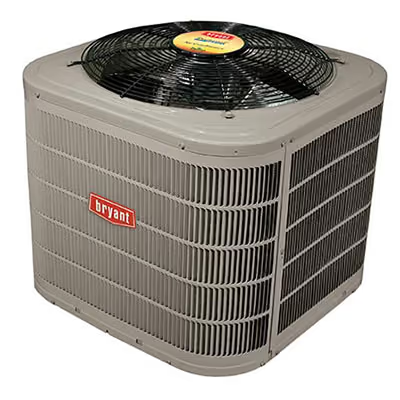
Carrier/Bryant “Evolution” series and Mitsubishi ductless lines will ship R-32 models in mid-2025. R-454B units follow later in the year. Expect limited inventory early; pre-ordering ensures installation dates.
Energy Savings
Switching from R-410A to R-32/R-454B heat pumps can reduce annual energy use by 10-18% for Portland households, saving $120-$220 per year based on PGE rates.
Installation Best Practices for New Refrigerants
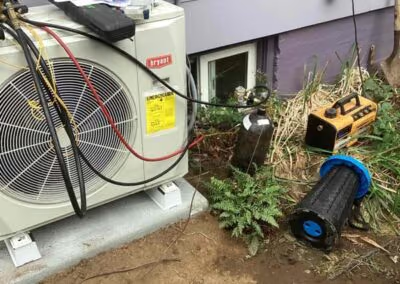
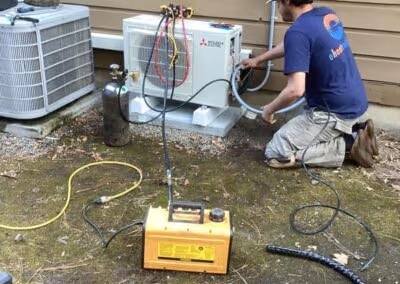
Proper installation ensures safety and performance. Every a/c install from Efficiency Heating & Cooling is handled by technicians trained on A2L refrigerants and equipped with specialized tools for compliant installations.
Plan Your Refrigerant Transition with Confidence
Schedule a consultation to build a replacement roadmap, secure incentives, and ensure your next system is future-proofed for refrigerant regulations.
Serving Portland, Beaverton, Tigard, Lake Oswego, West Linn, and surrounding communities.
Related Portland HVAC Services
Heat Pump Installation
Cold-climate systems featuring R-32 and R-454B refrigerants.
Air Conditioner Replacement
Upgrade to high-efficiency ACs designed for low-GWP refrigerants.
Maintenance Plans & Leak Detection
Protect refrigerant charge and extend equipment life.
Commercial HVAC Upgrades
Plan refrigerant transitions for commercial and multifamily properties.
Related
Refrigerant type affects both performance and long-term cost. Our AC buying guide factors in refrigerant availability when comparing system types for Portland homes.
Frequently Asked Questions
Can my existing R-410A system be converted to R-32 or R-454B?
No. Each refrigerant requires specific compressor design, expansion valves, oils, and electronics. Retrofitting is unsafe and voids warranties. Replacement is the recommended path.
Are R-32 and R-454B safe to use in homes?
Yes. They are classified as A2L (mildly flammable) with strict safety standards, including leak detection, ventilation guidelines, and lower charge amounts. When installed by certified technicians, they are safe for residential use.
Will new refrigerant systems qualify for rebates?
Yes. High-efficiency R-32 and R-454B systems can qualify for Energy Trust of Oregon rebates when installed by an approved trade ally. We'll identify the current utility and Energy Trust incentives your installation may qualify for and list confirmed savings in your estimate. Eligibility and offers can change.
What happens if my R-410A system needs a major repair?
Repairs will remain possible, but refrigerant and parts prices will continue rising. Compare repair quotes to replacement cost; new equipment may offer better long-term value and incentives.
How do I prepare for the switch to new refrigerants?
Schedule a consultation to evaluate equipment age, ductwork, electrical capacity, and financing options. Pre-ordering ensures you secure installation slots before peak season demand hits.
Will new refrigerants affect AC or heat pump performance in cold weather?
Cold-climate heat pumps using R-32 and R-454B maintain strong capacity down to 5°F. They often outperform legacy R-410A systems in low ambient conditions, providing more reliable winter heating.